- Level:
- Novice
- Lessons:
- 1 Lesson
Wendigo
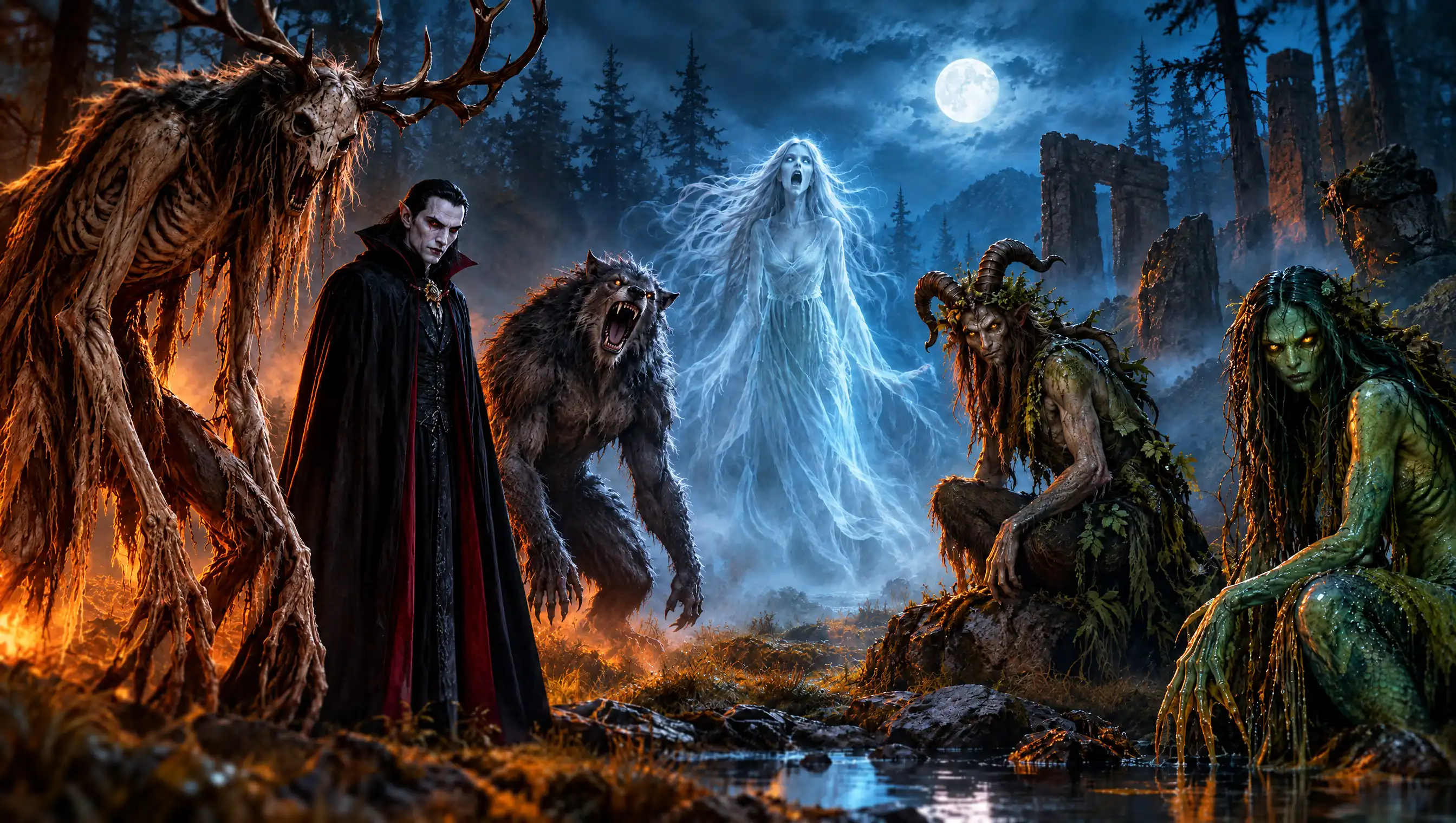
The Wendigo is a cautionary tale about greed, desperation, and the consequences of turning on one another to survive.
- Reading Time
- approx. 4 min
The Wendigo asks the question: What are people capable of when faced with desperation?
Its lore has spread across cultures, taking different shapes, but at its heart is a cautionary tale against untempered greed, and people turning on one another to survive.
Origins
Originating from Algonquian folklore, the Wendigo is a supernatural being that consumes humans.
The legend belongs to a wide family of peoples stretching Northern America, including the Ojibwe, Cree, Innu and Anishinaabe. Although descriptions vary between these cultures, the Wendigo is commonly linked to winter, famine and starvation.
For these northern peoples, winter could be deadly. When hunting failed and supplies ran low, survival depended on sharing what little there was. The Wendigo was the ultimate warning, and reminder, of what a person could become if they turned on their community. The story taught that cannibalism, even in desperation, was the gravest taboo, and that selfishness was the first step towards it.
In some traditions, a person became a Wendigo by eating human flesh. In others, they could be possessed by the spirit in a dream, or cursed by a shaman. Either way, the monster had once been human.
Legends say that when a Wendigo consumed a person, it would grow proportionally, ensuring that it was never satisfied. This led to the depiction of a tall, emaciated figure. The Wendigo became the embodiment of gluttony, greed and excess. Never satisfied after killing and consuming one person, it is constantly searching for new victims.
Appearance
There is a massive divide between how indigenous cultures historically described the Wendigo and how it is portrayed in contemporary media.
Traditional Folklore Appearance
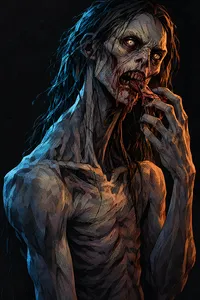
In Algonquian traditions, the Wendigo is entirely humanoid, representing a distorted, corrupted version of a person rather than an animal. Accounts describe it as a gaunt, emaciated giant with a skeletal frame. Its hunger is so strong that it chews off its own lips.
The creatures in Until Dawn (2015) retain this human shape: they are gaunt, skeletal, and lipless, with no antlers. Their appearance is closer to these descriptions, though the game invents its own rules for the creatures.
Modern Pop-Culture Appearance
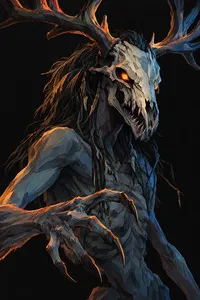
In many of today’s depictions, the Wendigo looks more like an animal: a deer or elk skull for a head, huge antlers, and traits borrowed from werewolves.
The film Antlers (2021) makes this modern image central to its creature design. This antlered motif is an invention of modern horror, likely adapted because antlers provide a striking, instantly recognizable visual shorthand for a “wild forest demon”, but has no basis in the original lore.
Core Themes
Because the Wendigo is rooted in real fears of famine and betrayal, the stories tend to follow familiar patterns. Some come directly from the traditional lore, while others have become prominent with the development of modern interpretations.
It Can Never Be Satisfied
The Wendigo’s defining trait is that it can never be satisfied. Its hunger is not a biological need but a supernatural punishment: the more it eats, the hungrier it becomes. This makes the Wendigo less a predator and more a warning about appetite without limits.
Greed and Selfishness
In many Wendigo stories, its hunger comes from taking more than one’s share and placing personal desires above the survival of others.
The TV series Hannibal (2013-15) shows a Wendigo-like antlered figure in the visions of Will Graham, the protagonist. This depiction of the cannibal Hannibal Lecter acts as a warning of the dangers that are closing in, long before Will sees the man clearly.
Anyone Can Become One
Because the Wendigo is a curse or a spiritual sickness, it can emerge from within anyone who gives in to desperation or greed.
Stephen King’s Pet Sematary (1983) shifts the focus toward grief. He links the Wendigo to a place that brings back the dead, turning the desire to undo a loss causes further harm. Here the consuming desire is the inability to let go.
Narrative Tropes
While the core themes shape what a Wendigo story means, narrative tropes help follow familiar story arcs:
The One Who Knows
A local character warns the outsiders… who don’t listen. In many older and some modern stories, the role goes to an Indigenous guide who exists only to deliver the warning, and often dies soon after.
The Skeptic
A rational outsider insists there must be a normal explanation, until there is proof that there isn’t one. Their disbelief often mirrors the way the Wendigo’s victims deny the hunger growing inside them.
The Call from the Woods
A voice calls a character’s name, or a companion disappears and later returns changed. The key moment is the choice between answering and staying put.
Algernon Blackwood’s The Wendigo (1910) builds this fear around a hunting party and a call that draws one member away into the wilderness. The creature is barely seen, creating a horror that comes from the unknown.
The Slow Transformation
A sympathetic character gradually changes, with the hunger growing and their morality eroding while the reader watches them become the monster. This is the tragic arc at the heart of the creature, and the clearest expression of the ‘Anyone Can Become One’ theme.
The Self-Sacrifice
A character feels the change beginning and chooses to walk away into the snow, or to end things, to protect the others.
Recap
Rooted in Algonquian folklore, the Wendigo can also appear as an antlered beast of modern horror. At its core, it was once human, and its horror comes from human choices and desires.
Next time you plan a story, ask: what would each of your characters become if they were hungry enough? The Wendigo is a reminder that heroes can fall to desire too.
This lesson was taught by:

Kate
Based in the UK, Kate has been writing since she was young, driven by a burning need to get the vivid tales in her head down on paper… or the computer screen.