Managing Expectations for Writing Challenges
- Reading time
- 3 min read
- Written by
- by Kate
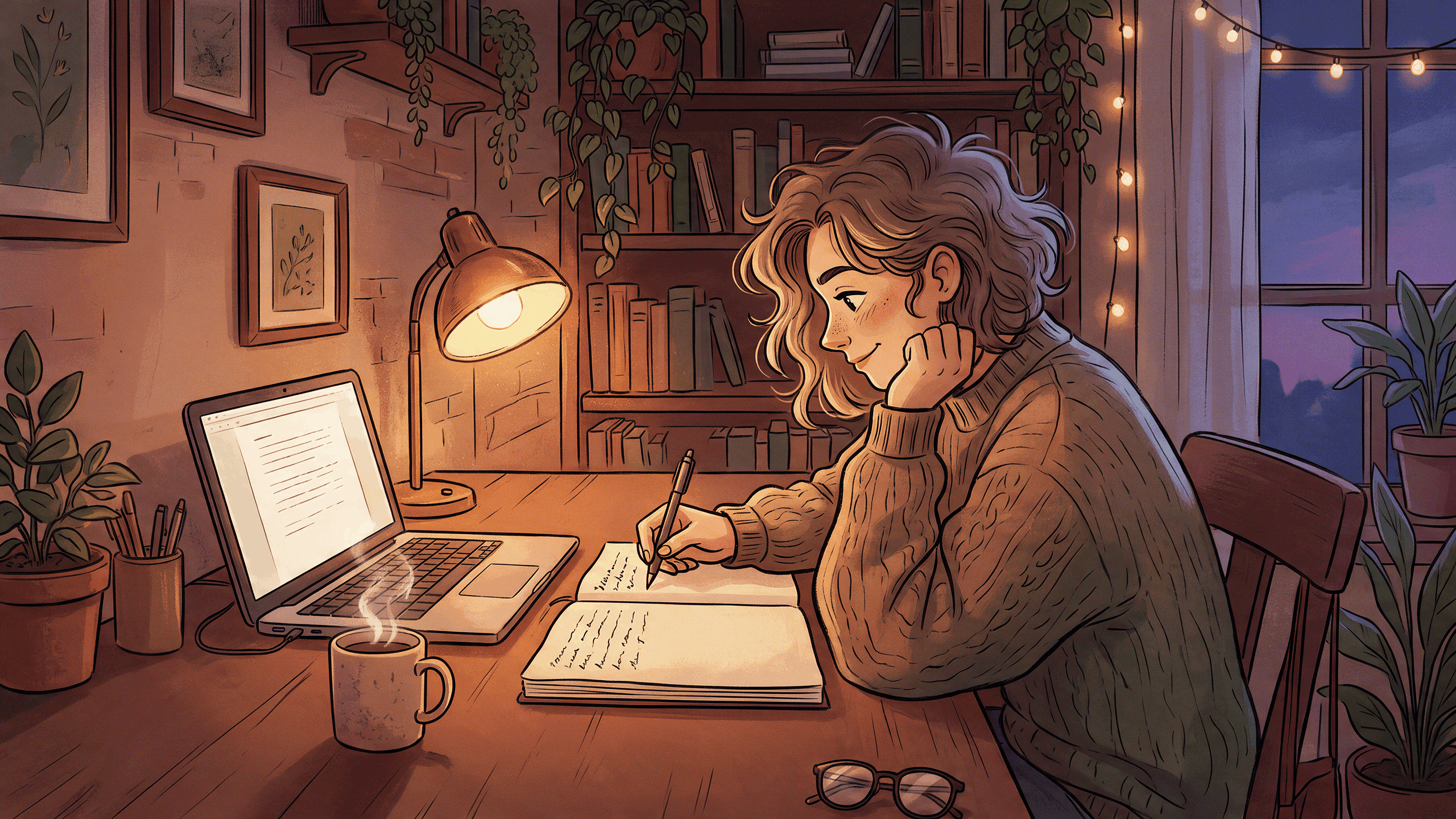
I love the shared enthusiasm of writing challenges. Writing alongside thousands of others is addictive, and watching my word count grow is really satisfying.
But a 50,000-word target isn’t always a realistic target. Responsibilities take away from writing time, and when perceived failures compound, motivation flees, leaving us marooned on an island of writer’s block. Instead of feeling excited to continue writing, we become disillusioned with the story we wanted to tell.
This year, I want to reflect on what makes these challenges difficult for me and what I can change.
Common Obstacles in Writing Challenges
Before embarking on these challenges, it helps to take time to look at what might hold us back, or become stumbling blocks.
Two things stand out for me.
Falling Behind on Daily Word Goals
First, there is the endless cycle of catching up. With a fixed daily word target, a missed session can feel like extra work waiting for tomorrow.
Imagine you need to write 1,667 words a day. On Tuesday, life gets busy and you write zero words. On Wednesday, you now have to write 3,334 words just to “stay on track”.
When I treat that larger number as a requirement, I can feel defeated before I even open my draft.
Getting Writer’s Block
Then there are times when I can’t get a scene to read the way I want. Other times, I get bored trying to write every scene in order. If I don’t know how a scene unfolds yet, insisting on finishing it can use up the time I have.
Yes, we could try to push through the block, but when already short on time, staring at a blinking cursor is insufferable.
Before the challenge starts, these questions help me spot likely obstacles:
- How much free time do I have? I look at a normal day, and halve the time I think I have available, to leave room for interruptions.
- What tends to keep me stuck? If I keep revising the same paragraph, I may need a different approach from the one I’d use when I don’t know what happens next.
- What might interrupt my writing time? Work or other commitments may affect my plans. I can account for some of those before choosing a target.
How I Make Writing Challenges More Manageable
I’ll preface this by saying that this is not the only way to tackle a writing challenge, just how I try to.
Starting with Scenes I’m Excited to Write
I find it easier to return to a draft when there’s a scene I’m looking forward to writing. Building momentum is incredibly important, and being excited to write the next day is key to this.
I like to start the day (or writing session) with whatever excites me most. It may be a sudden idea that I had the night before, a note that I wrote during a writing sprint, or a scene planned from the beginning that is suddenly sparking inspiration.
I let myself write that part, even when it belongs later in the story. During a drafting challenge, I’m comfortable leaving gaps that I can return to during revision.
If I don’t know how two scenes connect yet, I leave a brief summary in square brackets.
[The characters travel across the mountains. Scenes? Just a summary?]
Stopping While Momentum is High
When a writing session is going well, I’m tempted to keep going until I’ve written everything I can think of. However, as the month goes on, I find that doing this makes starting the next day much harder. I have to find a new starting point, a new idea that excites me.
Instead, I try to stop writing when I still know what happens next. Leaving a quick, messy note at the bottom of the scene gives future-me a thread to pick up immediately, rather than starting from a blank page, and allows me to jump back into the momentum.
Setting Realistic Writing Challenge Goals
If the 50,000-word target stresses you out, change the rules. You might decide to write for twenty minutes a day, or aim to finish ten scenes by the end of the month. At the end of the day, it’s an arbitrary target, and if it is stopping you from enjoying your work, then get rid of it.
I also leave room to adjust my plans after the challenge begins. If I miss a day or two, I can lower the overall target or revise my schedule to fit the time remaining.
The point of doing a writing challenge is to get me writing, not to pull me into a cycle of guilt and despair.
Making Progress Beyond Word Count
And even more so… Not every day has to be a heavy writing day. If I’m completely exhausted after work, spending time ‘braindumping’ story ideas, or adding a new character or location to my Codex still counts as working on my book!
Seeing those details develop helps me stay interested. Sometimes, a note about a character gives me an idea for the next scene.
A challenge should help you fall in love with your story, not make you dread opening your laptop. This year, I want to finish the month still interested in the story I’m writing. I’ll choose my target with that in mind.

Kate
Based in the UK, Kate has been writing since she was young, driven by a burning need to get the vivid tales in her head down on paper… or the computer screen.