

Issue 25
August 2026
Theme Machine
Memorable Characters
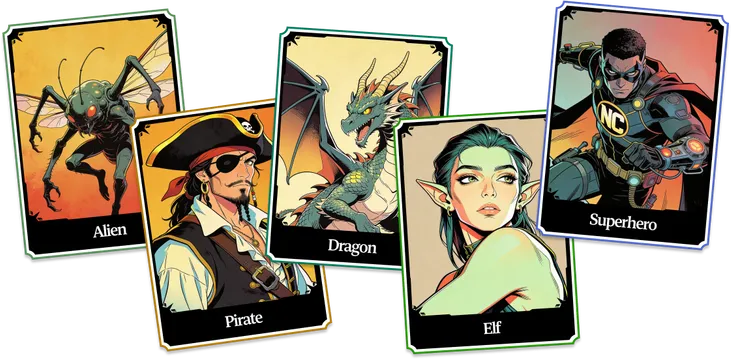
Find the perfect name for your protagonist, side characters, or NPCs with our name generator.
Help for Writers
Taming Tricky Character Names
Have you ever stumbled on a character’s name while reading? Sometimes, no matter how long you stare at it, you can’t figure out how to pronounce it. This happens often in fantasy and sci-fi, but it comes up any time a name is from a culture or language you’re not familiar with.
Take Hermione from Harry Potter. So many readers mispronounced it that J.K. Rowling wrote a scene in Goblet of Fire where Hermione sounds out her own name for Viktor Krum. Or consider Kvothe from Patrick Rothfuss’s The Name of the Wind — it’s pronounced “kwohth” (rhyming with “oath”), though you’d never guess it from the spelling.
A tricky-to-pronounce name can pull readers out of the story. Every time they see it, there’s a small moment of friction. Some readers start skimming past the name entirely, which can weaken their connection to the character over time.
But sometimes a name fits your character perfectly, and you don’t want to let it go. You have options. Authors like J.R.R. Tolkien and Christopher Paolini include pronunciation guides in their books’ appendices and glossaries. Others work the pronunciation into the prose itself, the way Rowling did with Krum’s scene. Some give their character an easier nickname for most of the book, saving the full name for dramatic impact.
Before you go ahead with a name, ask someone who hasn’t heard it to say it aloud. Do they get the pronunciation correct? Do they stumble?
If you need some further help finding a name that fits your characters, try out our name generator.

Research Corner
Conflict Through Relationships
Inner conflict can be hard to show without spelling it out. If your protagonist’s struggle stays locked inside their head, readers may never feel it. Secondary characters can give that struggle a visible form, drawing out different responses to unresolved questions.
In Avatar: The Last Airbender, Zuko’s need for his father’s approval becomes clearer through Iroh and Azula. Iroh offers patience and another path, while Azula reinforces his family’s link between fear and power.
In Jane Eyre, Rochester and St John offer Jane two incomplete answers to her desire for love and independence. Rochester asks her to compromise her principles for emotional connection. St John asks her to suppress personal fulfilment for duty. Their opposing demands turn Jane’s private struggle into choices the reader can see.
If your protagonist’s arc feels too quiet or linear, their supporting cast may need clearer positions on the central conflict. A relationship need not be hostile, as trust can also apply pressure.
Write your protagonist’s inner conflict in one sentence. Then choose three secondary characters and ask:
- Which side of the conflict do they represent?
- How do they test the protagonist’s current belief?
- What choice could they force the protagonist to make?
If you’re still starting out on your story, check out the brainstorming lesson on ‘designing the pressure cooker’.